
Two Common Gemstone Frauds You Need to Know About
As a professional gemologist, I receive numerous calls each year from individuals who have purchased or invested in gemstones with documentation claiming extraordinary values. Unfortunately, many of these cases involve two specific fraud patterns that have become disturbingly common in our industry.
At Gemology Resources, we believe knowledge is your best protection. Today, we're examining two particularly prevalent frauds that continue to deceive buyers: ruby in zoisite misrepresentation and the "lonsdaleite diamond" scam.
Ruby in Zoisite: The Multi-Million Dollar Deception
Understanding the Material
Ruby in zoisite is a naturally occurring rock from Tanzania, primarily from the Longido mining region. It consists of opaque ruby crystals embedded in green zoisite matrix, often with black hornblende inclusions. While this material has legitimate uses for carvings, cabochons, and decorative specimens, it has become the centerpiece of some of the gemstone industry's most audacious fraud schemes.
At gem and mineral shows, ruby in zoisite rough sells for approximately $250 per kilogram. Finished cabochons typically range from $10 to $50 each, and larger carved specimens might reach a few thousand dollars. This is important to remember when evaluating any opaque ruby specimen.
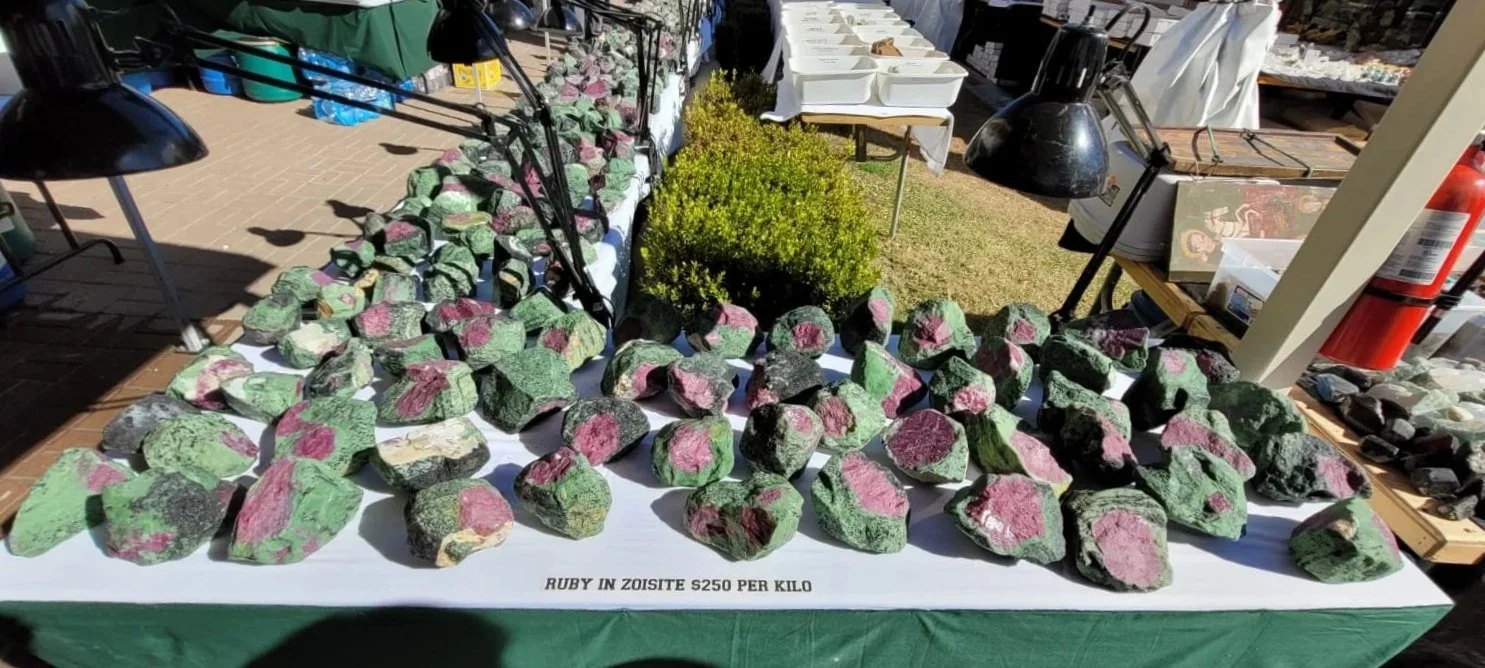
Ruby in zoisite at the 2023 Tucson Gem Show
The Fraud Pattern I See Repeatedly

Several times a year, I receive calls from individuals holding appraisals for ruby in zoisite specimens valued at millions—sometimes hundreds of millions—of dollars. The pattern is remarkably consistent.
The Documentation Trail:
A legitimate laboratory report (often from GIA) correctly identifying the material as natural ruby or natural ruby with zoisite
An appraisal claiming astronomical values
References to specimens with exotic names or designations
Valuations of $393,877,500 or similar fantastical amounts
What's Really Happening: The laboratory reports are often genuine—GIA and other reputable labs will indeed confirm that ruby in zoisite is natural ruby. However, confirming identity is not the same as establishing value. The fraudulent element enters with the appraisal, where someone assigns a value completely disconnected from market reality.
Red Flags to Watch For
Opaque Ruby Claims: If someone is comparing opaque ruby to transparent, gem-quality rubies, this is your first warning sign. These are entirely different categories of material with vastly different values.
Forged Documentation: Fake gemological reports are created using names similar to legitimate laboratories. In the Wrekin Ruby case, a certificate was issued under "Instituto Gemmologico Italiano" to mimic the genuine "Istituto Gemmologico Italiano" in Milan.
Unrealistic Valuations: I've seen multiple fraudulent or forged appraisals providing grossly inflated valuations that bear no relationship to market reality. Always verify the appraisal as well as the appraiser's credentials and standing with professional organizations.
Investment Pitch: These schemes often target wealthy individuals with limited gemological knowledge, particularly during periods of economic uncertainty when people seek alternative investments. When opaque ruby is marketed as an investment opportunity rather than a decorative stone or mineral specimen, be extremely cautious.
• • •
The "Lonsdaleite Diamond" or "Hexagonal Diamond" Scam
What You're Actually Buying: Industrial Mill Balls
The second fraud I encounter regularly involves spherical objects sold online as "lonsdaleite diamonds," "hexagonal diamonds," or "meteorite diamonds." Let me be absolutely clear: these are ceramic mill balls used in industrial grinding, not diamonds of any kind.
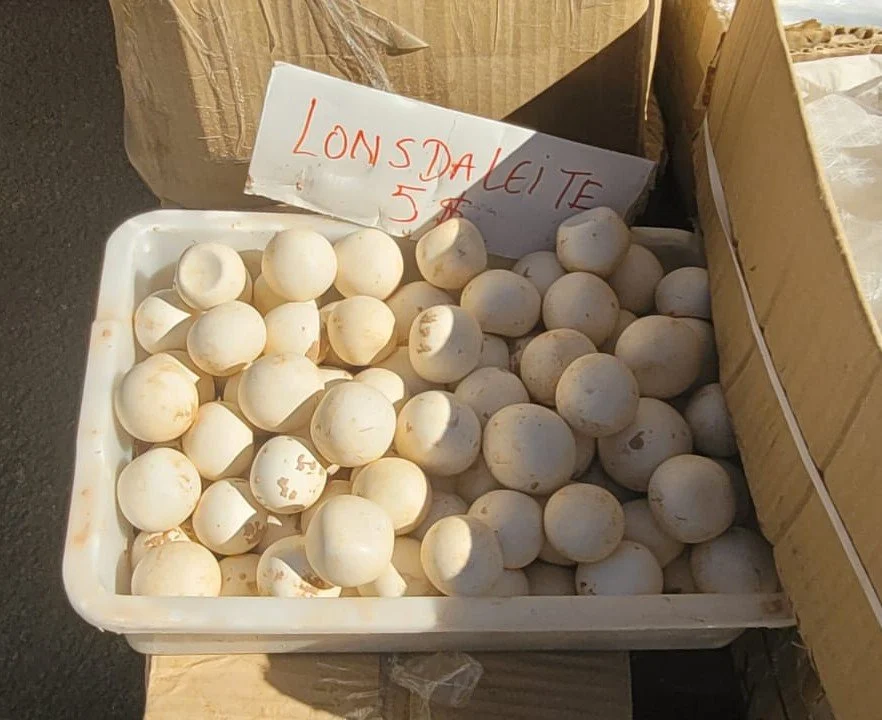
Lonsdaleite for sale at the 2025 Tucson Gem Show
What Lonsdaleite Actually Is
Lonsdaleite is a genuine form of carbon with a hexagonal crystal structure, first discovered in iron meteorites. Here's what you need to know:
True lonsdaleite crystals are microscopic—less than a micrometer in size
They require specialized equipment like X-ray diffraction to identify
They have never been found as visible crystals, let alone spherical objects
They occur only in specific types of iron meteorites
What's Actually Being Sold
The spherical objects being marketed as lonsdaleite are alumina ceramic mill balls:
Composition: Approximately 81% aluminum oxide (Al₂O₃) with silica and other additives
Purpose: Industrial grinding media
Value: Pennies per ball when purchased in bulk
Hardness: 9 on Mohs scale (which allows sellers to claim they're "almost as hard as diamond")
How to Spot This Fraud
The scam is relatively easy to identify once you know what to look for:
Spherical Shape: Real meteorites are never perfectly spherical. If the object is a smooth, round sphere, it is not a meteorite.
White or Light-Colored: These mill balls are typically white or cream-colored, unlike the dark appearance of iron meteorites where lonsdaleite actually occurs.
Size: If you can see the "crystal" with your naked eye, it cannot be lonsdaleite. True lonsdaleite crystals are microscopic.
Price Range: These objects are sold for anywhere from $20 to absurd prices like $195,000, despite having virtually no intrinsic value.
Composition Claims: If analyzed properly, these spheres will show high aluminum oxide content (around 81%), not carbon. True lonsdaleite would be 100% carbon.
Where These Objects Come From
Alumina ceramic mill balls are industrial products used in ball mills for grinding and pulverizing materials. They are made from readily available materials and are sometimes discarded, ending up in rivers or other locations where unsuspecting individuals find them and believe they've discovered something extraordinary.
• • •
How These Frauds Persist
Targeting the Uninformed
Both frauds succeed by exploiting gaps in gemological knowledge:
Using scientific-sounding terms ("hexagonal diamond," "anyolite ruby")
Mixing legitimate documentation with fraudulent valuations
Creating urgency or fear of missing out
Targeting wealthy individuals during economic uncertainty
The Role of "Paper"
Fraudsters understand that many people trust official-looking documents. They exploit this by:
Using legitimate lab reports (which only confirm identity) paired with fraudulent appraisals
Creating certificates from fake laboratories with names similar to real ones
Producing elaborate documentation packages that look impressive but contain fundamental errors
Protecting Yourself: A Gemologist's Advice
After decades in this field and countless calls about these exact frauds, here's my professional advice.
For Any Gemstone Purchase or Appraisal:
1. Understand Market Prices
Research what similar materials actually sell for at retail. Check recent auction results, dealer websites, and gem show prices.
2. Verify Everything
Call laboratories directly to verify reports. Check appraiser credentials with professional organizations. Get second opinions on high-value items.
3. Know Your Materials
Opaque rubies are not comparable to transparent gems. Matrix specimens are ornamental, not investment grade. Industrial materials (such as mill balls) have industrial value.
4. Question Extraordinary Claims
If it's supposedly worth millions, why is it being sold to you? Why haven't major auction houses handled it? Where are the comparable sales?
Why This Matters
These aren't victimless crimes. Each fraudulent transaction erodes trust in legitimate dealers and gemologists who work hard to maintain professional standards.
A Professional's Perspective
In my years as a gemologist, I've examined thousands of genuine treasures—stones with fascinating histories, exceptional beauty, and legitimate value. I've also seen far too many victims and potential victims of these two specific frauds. The contrast between someone's joy at owning a genuine, properly valued gemstone and their devastation upon learning they've been defrauded motivates me to share this information.
Remember: legitimate gemstones at fair prices offer beauty, enjoyment, and sometimes good investment potential. But stones with claimed values disconnected from market reality offer only disappointment and financial loss.
Final Thoughts
If you take away one message from this article, let it be this: when someone shows you an opaque ruby or spherical "meteorite diamonds" claiming values in the millions, you are looking at a fraud. These materials have legitimate uses and modest values, but they are not rare treasures worth fortunes.
At Gemology Resources, we use advanced analytical equipment, including spectrometers, microscopes, and other professional tools, to provide accurate identifications and honest valuations. If you have questions about a gemstone's authenticity or value—especially if you've received an appraisal that seems too good to be true—we encourage you to seek professional verification.
The beauty of the gemstone world lies in its genuine wonders, not in inflated claims about common materials. By staying informed and skeptical of extraordinary claims, you can enjoy this fascinating field while protecting yourself from those who would exploit your enthusiasm.
Have questions about a gemstone's authenticity or value? Contact a gemologist for an independent assessment. If you've received an appraisal claiming extraordinary value for ruby in zoisite or spherical "diamonds," seek immediate professional verification before making any financial decisions.