Jewelry Valuation 101: Jewelry Appraisal Types (Compared)
Since 1998, I've occupied many roles in the jewelry industry. I've worked as a seller behind the counter, a buyer searching for rare pieces, a gemologist, a repair manager overseeing complex restorations, and now, as an appraiser. Throughout those decades, I have seen one question pop up more than any other: "Why is my jewelry worth different prices?"
It is a fair question. You might have a diamond ring that you bought for $10,000, but your insurance company says it's worth $12,000, your estate attorney says it's worth $6,000, and a local jeweler offered you $4,000 for it. This isn't a mistake or a scam; it is a reflection of the different jewelry valuation standards used in the market.
As an Accredited Senior Appraiser of the American Society of Appraisers (ASA), my role is to provide a qualified appraisal that matches the specific purpose of your report. My commitment to ethics and continuing knowledge means I don't just guess at numbers; I use my gemstone knowledge and market data to ensure your valuation is legally and financially sound.
Let's break down the most common types of jewelry appraisals so you can ensure you're getting the right protection for your assets.
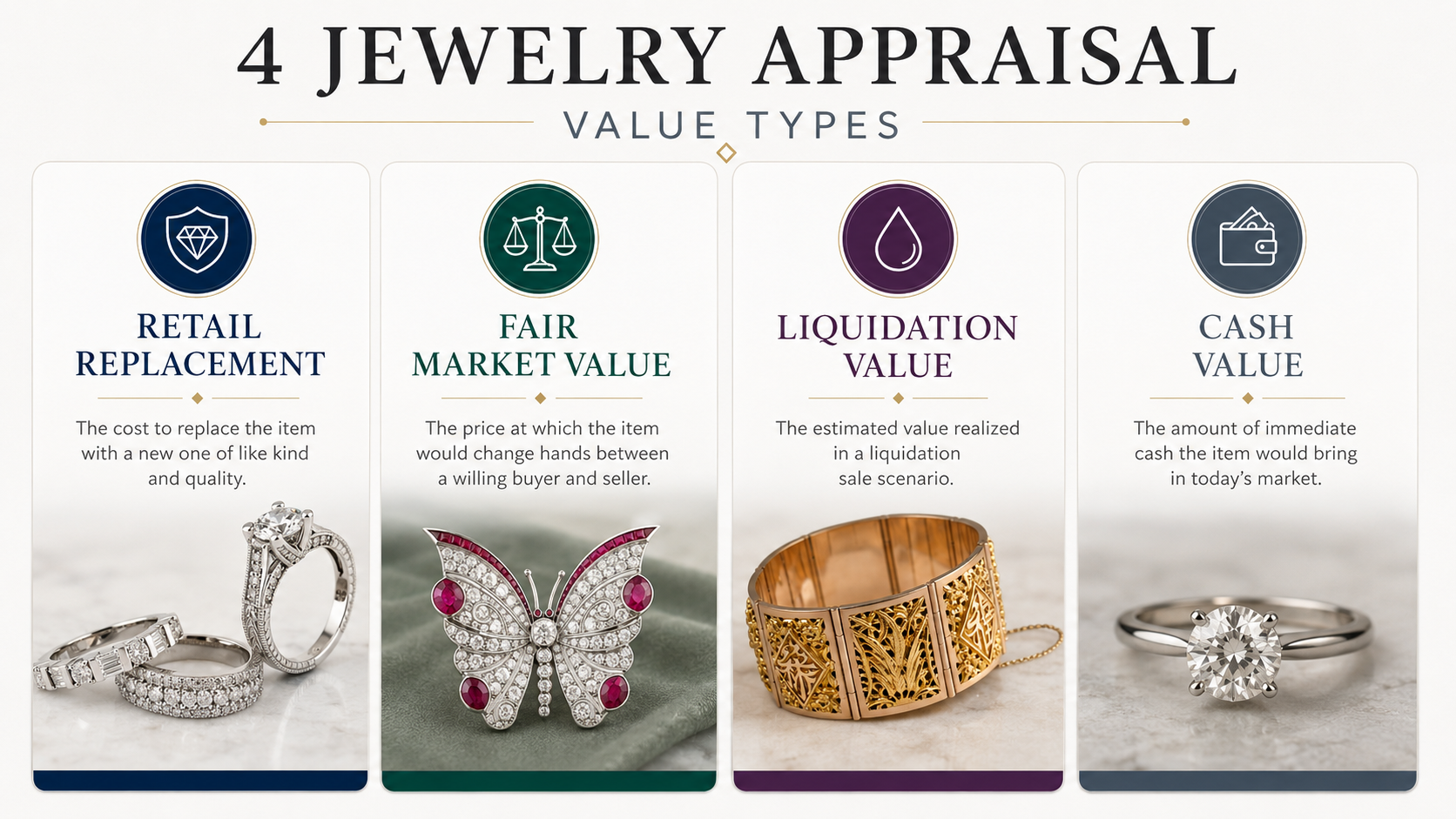
1. Retail Replacement Value (RRV)
This is the most common type of jewelry insurance valuation. If you are looking to protect your jewelry against loss, theft, or damage, this is the value standard we use.
Retail Replacement Value is defined as the highest price a consumer would pay to replace an item with one of like kind and quality in the most common retail market. Because this value accounts for the current cost of materials, labor, and the retail markup of a traditional jewelry store, it is almost always the highest number you will see on a report.
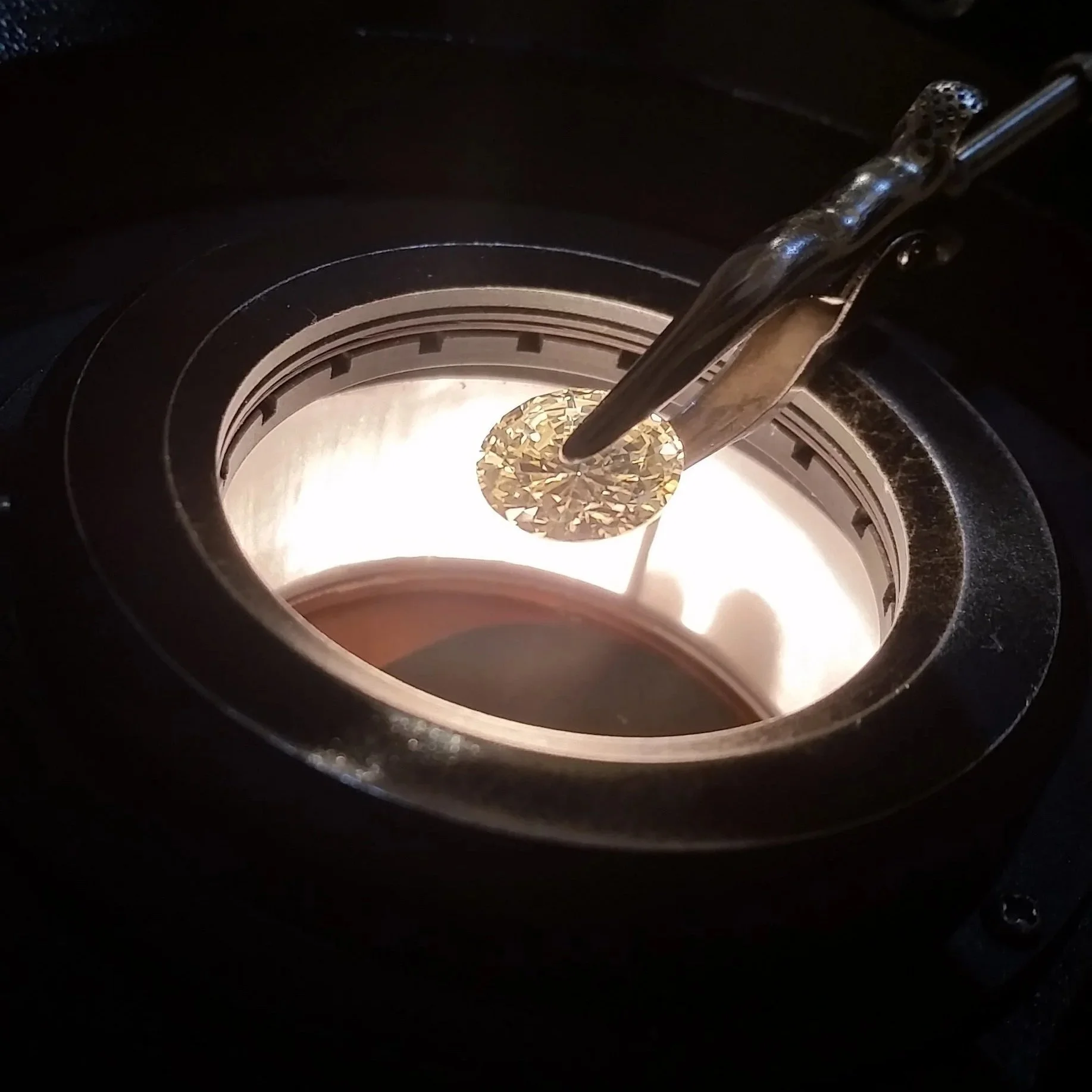
When I perform a diamond appraisal for insurance purposes, I do not act as an advocate — I am objective. I use advanced tools like spectrometers to verify the stone's origin, checking whether a diamond is natural or synthetic/lab-grown.
Key takeaway: RRV is a "what would it cost to buy a new one today" figure. It is not what you would receive if you sold the item.
2. Fair Market Value (FMV)
If you are dealing with an estate jewelry appraisal, a divorce settlement, or a tax-related matter, the IRS and the courts require Fair Market Value.
The definition of FMV is very specific: "The price at which the property would change hands between a willing buyer and a willing seller, neither under any compulsion to buy or to sell and both having reasonable knowledge of relevant facts."
Unlike insurance value, which looks at what it costs to buy new, FMV looks at the secondary market. Think of it like a used car. A new car has a high retail price, but its "fair market value" the moment it leaves the lot is lower. In jewelry, this reflects what a private individual or an estate would realistically receive in a sale between two knowledgeable parties.
In our Houston office, clients are often surprised that their FMV comes in well below their insurance value. Rather than applying a flat percentage, I research actual comparable sales and/or obtain real offers from the secondary market to support each figure. This is normal — FMV removes the "retail overhead" and focuses on the intrinsic value and current demand for that specific piece in the secondary market.
3. Estate or Liquidation Value
Sometimes, you don't have the luxury of time to find a "willing buyer." If an estate needs to be settled quickly to pay taxes or debts, we look at Liquidation Value.
There are two subtypes here:
Orderly Liquidation Value: You have a few weeks or months to sell.
Forced Liquidation Value: You need the money immediately. At this level, a piece is often valued at little more than its scrap or melt component.
These values are typically the lowest. They represent what a dealer or a refinery would pay for the raw materials: the gold weight and the wholesale price of the gemstones. When I provide jewelry appraisal services for executors or attorneys, I am careful to clarify which level of liquidation we are targeting. A quick sale to a pawn shop will result in a much smaller payout than a curated auction.
4. Donation Value
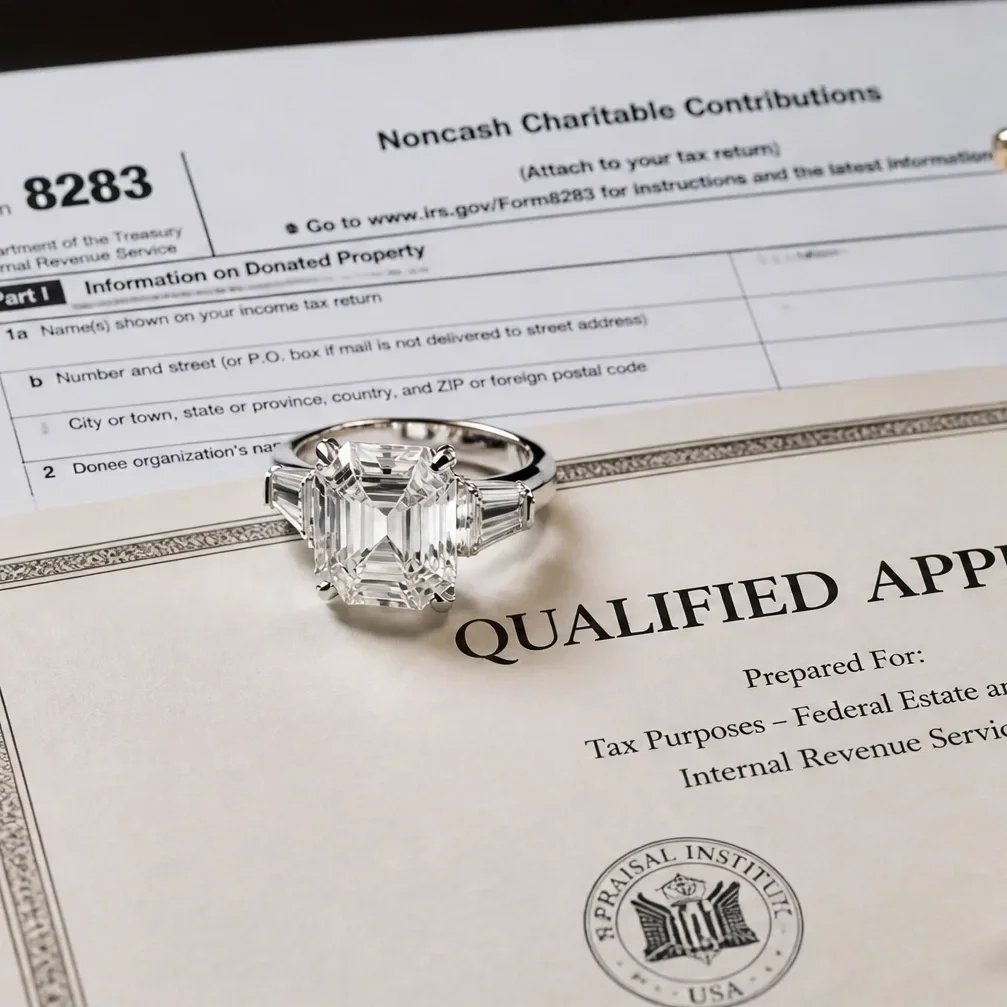
Thinking about donating a piece of jewelry to a museum or a charity? You'll need a qualified appraisal to claim a tax deduction.
The IRS is very strict about donation values. For any item over $5,000, you must have a report signed by a qualified appraiser. For tax purposes, the donation value is based on Fair Market Value. You cannot use your insurance replacement value for a tax deduction.
Using my ASA credentials, I ensure these reports meet all "Uniform Standards of Professional Appraisal Practice" (USPAP) requirements. This protects you from the risk of an IRS audit. We look at the quality, treatment, and rarity of the stone, along with its internal characteristics, to ensure the donation reflects the true worth of the piece.
5. Cash Value (The "Walk-In" Price)
Many people visit a professional office simply because they want to sell their jewelry and want to know "what can I get for this right now?"
This is properly called Marketable Cash Value: the net amount realized after the costs of selling are deducted. It sits above forced liquidation, because it assumes a reasonable, non-distressed sale rather than an immediate one.
Why a Qualified Appraisal Matters
I always advise clients to question extraordinary claims from buyers who offer "full retail value" for used jewelry. Unless the piece is a signed historic item (like a vintage Cartier or Tiffany piece), the cash value will be significantly lower than the price you paid at retail.
The jewelry market is constantly changing. Metal prices fluctuate with commodity markets, labor costs shift, and even style trends affect value — a piece in high demand because it's currently 'in style' can command a different price than the same piece would a few years from now. This is why ethics and continuing education and knowledge are so important.
When you choose an appraiser, you aren't just paying for a piece of paper; you are paying for their experience and their technology. I've been in this business since 1998, and I've seen how incorrect valuation can lead to being underinsured or paying too much in estate taxes.
Verify everything. Ensure your appraiser is an FGA, Graduate Gemologist, and belongs to a respected organization like the ASA. This ensures they are held to a code of ethics and are up to date on the latest market trends and scientific advancements.
If you have questions about which report you need, contact us at our Houston office. Whether you need a diamond appraisal for your engagement ring or a full inventory for an estate jewelry appraisal, we are here to provide the precision and dependability you deserve.
Summary of Appraisal Types
Retail Replacement: Best for Insurance Coverage.
Fair Market Value: Best for Estates, Divorce, IRS, and Tax Deductions.
Liquidation Value: Best for Rapid or Forced Sales.
Cash Value: Best for Selling Today.